The best voice cloning software for most people is ElevenLabs: it has the strongest all-round clone quality and the simplest setup. If price is your main concern, Fish Audio is the cheapest serious option. And if you want cloning that is completely free and private, open-source models now let you clone a voice entirely on your own computer.
The catch is that "best" depends on the job you are hiring the clone to do. A podcaster patching one mispronounced name, a course creator narrating forty lessons, and a developer generating a million characters a month need three different tools — so this ranking is organised by job, not by a single winner. If you want the mechanics first — what a voice clone actually is, and how the training works — our AI voice cloning guide covers that. This page assumes you know the basics and just need to pick.
Quick Answer: Which Voice Cloning Software Should You Pick?
For the strongest all-round clone, take ElevenLabs — it is the safest default for narration, dubbing, and voice agents. For the most cloning per dollar, take Fish Audio. For fixing mistakes inside a podcast or video you already edit, Descript's Overdub is the smoothest fit, and Murf suits teams producing courses and explainers. And if the budget is zero and the audio is private, skip the cloud entirely: run an open-source model on your own machine.
Quick picks by use case
| Tool | Best for | How you clone | What it costs (Nov 2026) |
|---|---|---|---|
| ElevenLabs | Best overall — narration, dubbing, voice agents | Instant clone from ~10 seconds; professional clones from longer recordings | Free tier (~10 min/month), then plans that scale with credits; API at $0.08 per 1,000 characters |
| Fish Audio | Best value — serious cloning on a budget | Clone from ~15 seconds of reference audio | Free test tier (~7 min/month); Plus $11/mo billed annually; API ~$15 per million characters |
| Descript | Podcast & video creators who edit in Descript | Overdub: a clone of your own voice, inside the editor | Paid editor plans; cloning is a feature, not sold separately |
| Murf | Teams making courses, explainers, marketing videos | Custom clone inside a narration studio | Studio plans; cloning sits on the top tiers only |
| Open-source models | Free, private, local cloning | One reference clip + its transcript, on your computer | Free software — you provide the hardware and setup time |
One question before you pay for any of this: do you actually need a clone? If the job is plain narration and any good voice will do — a course, an explainer, a video voiceover — a stock AI voice is cheaper and faster, and you can generate it free with a text to speech tool today. Cloning earns its cost when the voice itself is the point: your voice, your host's voice, your brand's voice.
ElevenLabs — best overall
ElevenLabs is the default recommendation because it wins on the thing that matters most: the clone actually sounds like the person, including the small stuff — pacing, emphasis, the way a sentence trails off. Its current models, Eleven v4 and v4 Turbo, launched on September 28, 2026, and according to ElevenLabs' launch announcement they support more than 90 languages and can build an Instant Voice Clone from about 10 seconds of audio. A clone made once can then speak any of those languages while keeping the original voice's identity, which is why dubbing and localisation teams lean on it so heavily.
There are two cloning levels. Instant Voice Cloning is the fast one: upload a short clean sample, get a usable clone in minutes. Professional Voice Cloning uses longer recordings and a verification process, and produces the higher-fidelity result you would use for a published audiobook or a public-facing brand voice. For real-time work — voice agents, live assistants — the Turbo model is the low-latency sibling built for conversation rather than narration.
The honest costs: a free tier gives you 10,000 credits a month, roughly 10 minutes of audio — enough to test, not to publish a series. After that you pay in credits, and the per-character maths climbs quickly at volume; the API lists v4 at $0.08 per 1,000 characters. None of that makes it bad value if quality is the priority. It makes it the wrong tool for generating a million characters on a budget — which is exactly the gap the next pick fills.
Fish Audio — best value
Fish Audio is what you pick when the ElevenLabs bill starts to sting. It clones a voice from roughly 15 seconds of clean reference audio (that's the vendor's figure — budget a little more for a better result), and its pricing undercuts the market leader hard: as of November 2026, the Plus plan is $11 a month billed annually, and the API runs about $15 per million characters, against roughly $80 per million at ElevenLabs' list price. The free tier gives you around seven minutes a month — a test tier, not a production tier.
Fish Audio also has an open-source streak: it publishes model weights that developers can run locally, currently for non-commercial use, which is part of why its developer community is large and its voice library keeps growing.
The trade-offs are real. Output quality is strong in English and a few major languages and noticeably less consistent in others, so test your exact language before committing a project. The interface and documentation are rougher than ElevenLabs' — you are trading polish for price. If your work is high-volume narration or an API integration and the budget is fixed, that is usually the right trade.
Descript & Murf — best creator workflow
Sometimes the clone is not the product — the workflow around it is. That is where these two earn their place.
Descript is a transcript-first audio and video editor: you edit a recording by editing its text. Its cloning feature, Overdub, builds a clone of your own voice inside that editor, so when you spot a mispronounced name in a finished podcast, you type the correction and Overdub speaks it in your voice, in place — no re-recording, no separate cloning app. It is genuinely the fastest fix-it workflow on this page. The limits are just as clear: Overdub shines on short patches and corrections, and long stretches of generated narration can lose the natural rhythm of a real take. It is a paid-editor feature, and Descript makes you verify consent before it will clone a voice at all.
Murf is a narration studio for teams: script in, voiceover out, with shared workspaces, a pronunciation library, and projects organised for courses, explainers, and marketing videos. Its voice cloning lets a company keep one spokesperson's voice consistent across all of that content. The catch is where cloning sits in the range: it is a top-tier feature (Business/Enterprise territory), so if a clone is the only thing you want from Murf, you will pay studio money for it. If your team is already producing narration every week, the clone is a bonus on top of a studio you actually use.
With both tools, judge the room, not just the clone. Neither is the cheapest or the absolute sharpest cloning engine here — they win when the editing and organising around the voice is the work you do every day.
Free & open-source cloning (local models)
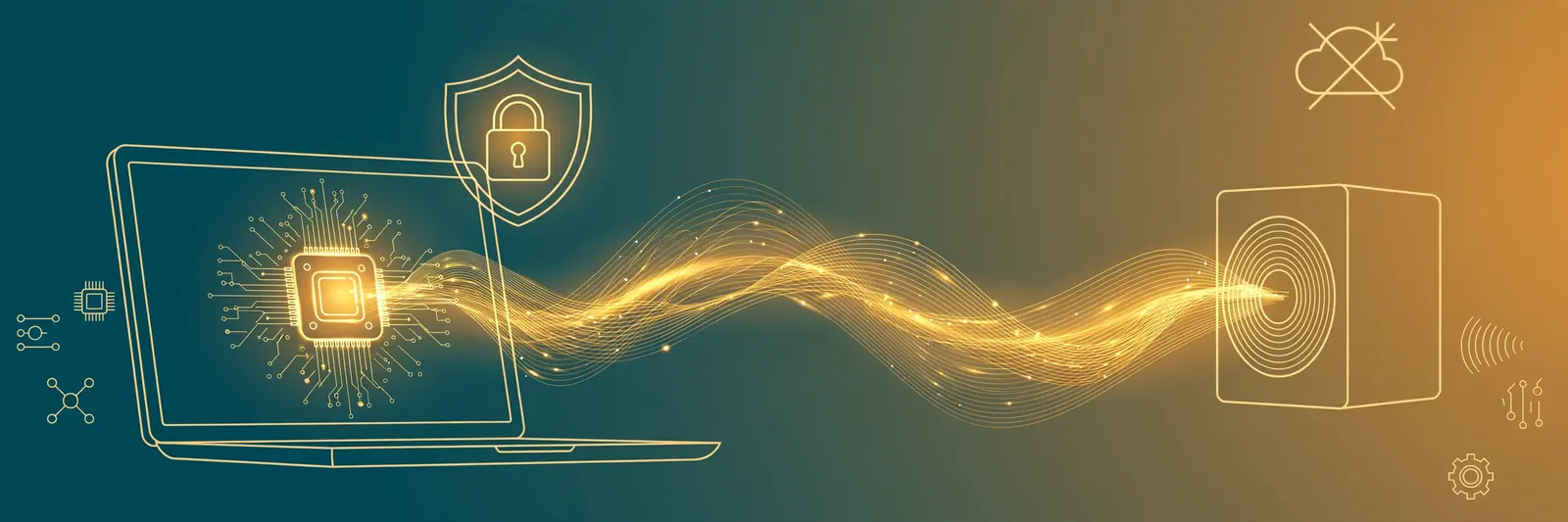
The newest route skips the subscription entirely. Open-source models now run on an ordinary computer, take one reference clip plus its transcript, and generate speech in that voice locally — your recordings never leave the machine, and there is no per-character meter. The release that made this practical for non-developers is Edge0's Audio8, and our full explainer — free voice cloning without the cloud: Audio8 explained — covers what it does and what you need to run it. Fish Audio's published weights (above) are the other door into local cloning, though their licence is non-commercial.
Be clear-eyed about the costs, because "free" here means free of charge, not free of effort:
- Setup. You are installing models, not signing up for a website. Expect an afternoon of tinkering, and a decent GPU makes life much easier.
- Quality variance. The best local results are genuinely good; the average first attempt is not. Clean reference audio matters even more than it does in the cloud.
- Licences. Open weights are not automatically free for commercial work — Audio8 is Apache 2.0, others are non-commercial only. Read the licence of the exact model you download before a client project touches it.
Pick local when privacy is the point (medical narration, internal recordings, anything you would rather not upload), when the volume would make cloud pricing silly, or when you simply want to learn how this works. Pick the cloud when you need the voice by this afternoon.
Consent & legal rules before you clone a voice
Every tool above will happily clone a voice in minutes, which is exactly why this section sits before the FAQ and not in the fine print. The working rules are simple:
- Your own voice: fine. Clone it, use it, sell the output.
- Someone else's voice: only with their explicit permission — ideally written, and kept on file. ElevenLabs' own stated position is exactly this: your voice is yours to clone freely, anyone else's requires their explicit consent, and its professional clones make the voice owner verify that consent before the clone is created. Descript and Murf run their own versions of the same check.
- No consent, no clone — not for a prank, not for a "tribute," not for a celebrity voiceover you plan to monetise. Fraud, impersonation, and misleading political or commercial content are where voice cloning stops being a tool and becomes a legal problem.
- Tell your audience when content is AI-voiced where the platform or your local rules require disclosure, and get voice actors' agreements in writing before cloning a hired voice.
The detailed version — which laws apply, how different countries treat cloned voices, what to put in a consent agreement — is in our guide to whether AI voice cloning is legal. Five minutes there is cheaper than one takedown.
The bottom line: Pick by job, not by logo. ElevenLabs is the strongest all-round clone and the right default when quality is the whole point. Fish Audio gives you most of the result for a fraction of the running cost, especially at volume. Descript and Murf make sense when the clone lives inside an editing or team workflow you already use every week. And the open-source route — Audio8 and its cousins — has quietly become the best answer of all when the voice is private, the budget is zero, and you can spare an afternoon of setup. Whichever you choose, get the consent sorted first: it is the one part of voice cloning that no software can do for you.
By Mauhnish — I build TextToSpeechH and write these guides from what actually works when you test it, not from feature lists. If a step above didn't work the way I described, the tool changed — tell me and I'll fix the guide.
Frequently Asked Questions
How much audio do you need to clone a voice?
Less than you probably expect. ElevenLabs' current models can build an Instant Voice Clone from about 10 seconds of clean audio, and Fish Audio works from roughly 15 seconds. More audio still helps: a quiet, clear one-to-three-minute recording gives any tool more tone and pronunciation detail to copy, and usually sounds noticeably more convincing.
Is voice cloning legal?
Cloning your own voice is legal in most places, and cloning someone else's voice with their clear, explicit permission is the accepted route. Cloning a voice without consent — especially for fraud, impersonation, or misleading content — can break fraud, privacy, and publicity laws. The rules are tightening, so read our full legal guide before publishing anything.
What is the cheapest voice cloning software?
For paid software, Fish Audio: its Plus plan is $11 a month billed annually (as of November 2026) and its per-character API rates are a fraction of ElevenLabs'. Cheaper still is the free route: open-source models on your own computer cost nothing but time and hardware.
Can I clone my own voice for free?
Yes. The simplest free path is an open-source model like Audio8 running locally on your own computer — no subscription and your recordings never leave the machine. Cloud tools also offer small free tiers for testing a clone. Just expect limits: free cloud tiers restrict minutes and commercial use, and local models need setup and a decent computer.
Sources & References
- W3C Web Accessibility Initiative — "Audio Content & Video Content" text-to-speech guidance: www.w3.org/WAI/media/av/av-content/
- Wikipedia — Speech Synthesis & Speech Recognition: en.wikipedia.org/wiki/Speech_synthesis
- van den Oord et al. — WaveNet: A Generative Model for Raw Audio: arxiv.org/abs/1609.03499
- Shen et al. — Natural TTS Synthesis by Conditioning WaveNet on Mel Spectrogram Predictions (Tacotron 2): arxiv.org/abs/1712.05884
- Google — Neural Text-to-Speech & AI Overview documentation: cloud.google.com/text-to-speech