
Quick Answer: Can You Clone Your Voice for Free in 2026?
Yes — for light use. ElevenLabs, PlayHT, and Speechify all offer free tiers with instant cloning from a short voice sample (typically around 10,000 characters a month), and open-source tools like F5-TTS are free forever but need technical setup.
The catches nobody puts on the landing page: monthly caps run dry fast, free clones sound like you only on good days, and free tiers are personal-use only. For everyday voiceover work, plain text-to-speech is usually the smarter free move — this guide explains exactly why.
You have probably seen the demo: someone records 15 seconds of their voice on a laptop, types a sentence, and the computer says it back in their voice. No cloud, no subscription, no training session. It feels like magic — and in 2026, it is mostly real.
Voice cloning has gone from a research-lab curiosity to a free browser tab in about two years. But the free part comes with catches nobody puts on the landing page: character caps that run dry mid-project, clones that sound like you only on good days, and the serious question of whose voice you are allowed to clone at all.
This is the honest version: how AI voice cloning actually works, what you can genuinely do for free today, and where plain text-to-speech is the smarter free choice.
1. How Voice Cloning Actually Works
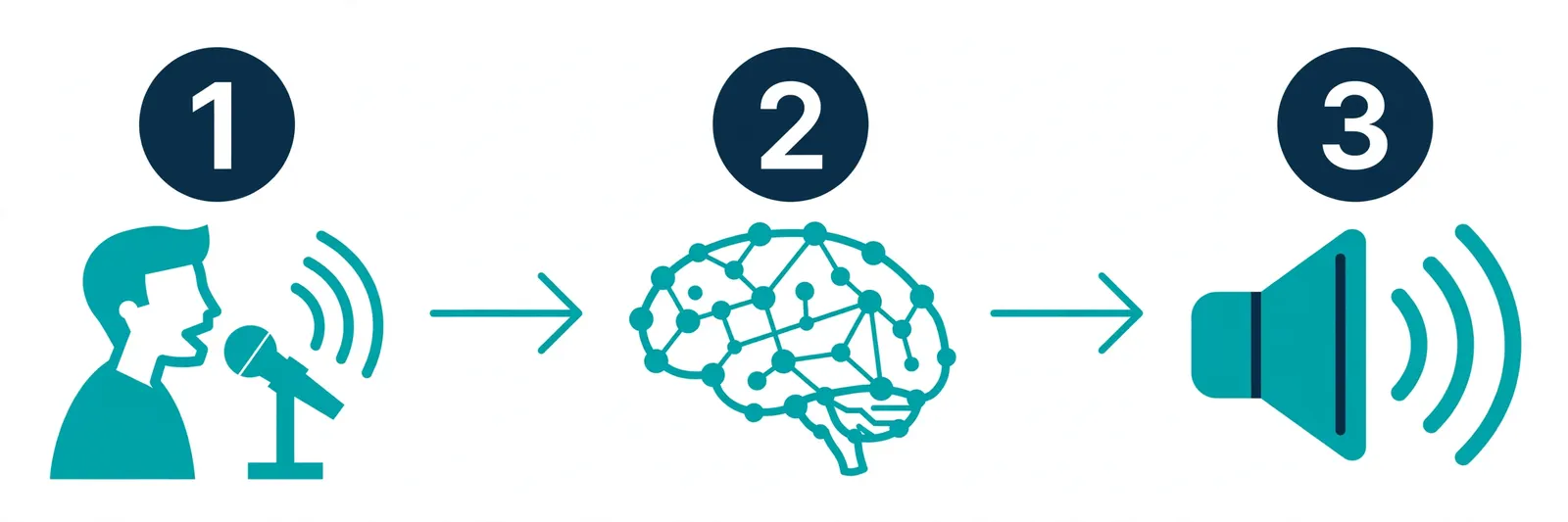
Forget the old idea of "training a voice model" for hours. Most modern cloning is zero-shot: the model listens to a short reference clip — 10 to 30 seconds — extracts the speaker's vocal fingerprint (timbre, pacing, pitch habits), and applies it to any text you give it.
The pipeline looks like this:
- Reference clip — a clean recording of the voice you want to clone.
- Speaker encoding — the model compresses the voice into a numerical "voiceprint."
- Text encoding — your script is converted into phonetic instructions.
- Synthesis — a neural vocoder generates audio that sounds like the voiceprint reading the script.
Quality lives and dies on the reference clip. A noisy 15-second phone recording in a car gives you a noisy clone. A quiet 30-second read in a bedroom gives you something uncanny.
2. Your Genuinely Free Options in 2026
ElevenLabs free tier (instant clone)
The most reliable free cloning on the market. Upload a ~1-minute sample and you get an instant clone with about 10,000 characters per month. That is enough for short intros, greetings, or a two-minute welcome message — not enough for a channel. The catch everyone hits: once you are out of characters, you are done until next month, and the free tier does not allow commercial use.
Open-source tools: F5-TTS, Spark-TTS, Coqui XTTS
This is where the viral YouTube demos come from. These models run on your own laptop — nothing uploaded to a server — and clone from a 3–10 second sample at zero API cost. The trade-off is comfort: you are dealing with command lines, model downloads, and dependency errors. If "pip install" does not scare you, this is the most powerful free route in existence. If it does, keep reading.
Google AI Studio's voice tools
Google's free AI Studio tier gives you access to its voice models for experimentation. It is infrastructure-grade and free to try, but it is built for developers and tinkerers, not creators who want a voiceover in five minutes.
Speechify and PlayHT free tiers
Both offer free plans with voice cloning included. Limits are tight (a few minutes a month), and the best voices sit behind paywalls. Fine for testing the concept; not a production workflow.
3. Where Free Cloning Falls Short (Honestly)
Nobody's landing page says this, so I will:
- It only sounds like you on good days. Pauses, emphasis, and numbers are where free clones sound most robotic. Emotional range is the first thing that breaks.
- The monthly caps are the real price. 10,000 characters sounds fine until you realize a 10-minute video script is 7,500–9,000 characters. One video a month, maybe.
- Commercial use is murky. Free tiers typically restrict you to personal use. If the video earns money, check the terms — "free" stops being free fast.
- You can only clone voices you have rights to. This is not just ethics; platforms are enforcing it. YouTube and others expect disclosure of AI-manipulated audio, and cloning someone else's voice without consent is a fast track to strikes and lawsuits.
4. When Plain TTS Is the Smarter Free Move
Here is the question to ask: do you actually need your voice, or do you need a good voice?
If you are making explainer videos, tutorials, audiobook chapters, or product demos, the audience does not care whose voice it is. They care that it sounds natural and keeps them listening. A generic AI voice costs nothing to generate, has no monthly clone cap, and does not raise consent questions.
This is the exact trade-off a free TTS tool is built for. TextToSpeechH gives you free neural voices with no signup, adjustable speed and pitch, MP3 export, and a Read-Along mode that highlights each word as it is spoken — handy when you are following a tutorial or an audiobook chapter. So for everyday voiceover work, you skip the cloning caps entirely and just make the audio. Save the cloned voice for the 30-second branded intro where it actually matters.
One honest caveat on languages: most free cloning tools are English-first, and some languages barely get covered at all. Arabic is the classic example — written Arabic skips vowel marks, so engines have to guess pronunciation. If your audience is Arabic-speaking, skip the cloning experiment and start with tools built for it: our Arabic text to speech tools guide compares the 7 best free options.
5. The Scam Side You Should Know About
Voice cloning's dark side is real and worth one paragraph: scammers clone a family member's voice and call relatives with fake emergencies ("I'm in trouble, send money"). This is genuinely happening. The defense is a family code word — agree on one now, use it whenever a "distressed relative" calls asking for money. And the one rule that covers everything: only ever clone a voice you have explicit permission to use.
6. Frequently Asked Questions
Q1: Is it free to clone your own voice with AI in 2026?
Yes, for light use. ElevenLabs, PlayHT, and Speechify all offer free tiers supporting instant cloning from a short sample, typically capped around 10,000 characters a month. Open-source tools like F5-TTS are free forever but require technical setup.
Q2: How much audio do I need to clone my voice?
10–30 seconds of clean audio is enough for zero-shot tools. Professional fine-tuned clones may want several minutes, but for the free tier, one quiet minute beats ten noisy ones.
Q3: Can I use a cloned voice for YouTube videos commercially?
Usually not on free tiers — check the terms. Free plans are typically personal-use only. Also disclose AI-generated audio in your video settings; platforms increasingly require it.
Q4: What's the difference between voice cloning and text-to-speech?
Cloning reproduces a specific person's voice from a sample. Text-to-speech generates speech in a generic or stock voice. Cloning is branded and capped; TTS is unlimited-feeling and free. For most content, TTS is the practical choice — try the free voice generator and compare.
Q5: Is voice cloning legal?
Cloning your own voice is fine. Cloning someone else's without consent can violate publicity rights and, in some places, specific AI-voice laws. The legal landscape shifted a lot in the last 18 months — verify before building anything commercial.
Skip the cloning caps — just make the audio
Need a voiceover without the cloning hassle? Paste your script into TextToSpeechH, pick a voice, and download the MP3 — free, no signup, and the Read-Along mode highlights each word as it plays. Save the cloned voice for the 30-second branded intro where it actually matters.
Try TextToSpeechH FreeRelated Guides
Sources & References
- W3C Web Accessibility Initiative — "Audio Content & Video Content" text-to-speech guidance: www.w3.org/WAI/media/av/av-content/
- Wikipedia — Speech Synthesis & Speech Recognition: en.wikipedia.org/wiki/Speech_synthesis
- van den Oord et al. — WaveNet: A Generative Model for Raw Audio: arxiv.org/abs/1609.03499
- Shen et al. — Natural TTS Synthesis by Conditioning WaveNet on Mel Spectrogram Predictions (Tacotron 2): arxiv.org/abs/1712.05884
- Google — Neural Text-to-Speech & AI Overview documentation: cloud.google.com/text-to-speech