
You talk to it, and it talks back — no typing, no waiting for a transcript, no separate voice reading out an answer someone else wrote. That is speech-to-speech AI, and on October 20, 2026, ElevenLabs turned it from a research demo into a product most people can actually use, with the launch of Eleven Realtime.
If you make anything with AI voices — videos, audiobooks, podcasts, courses — this shift matters to you even if you never write a line of code. The way voice tools are built is changing underneath you, and the tools you use next year will be shaped by it.
Quick Answer: What Is Speech-to-Speech AI?
Speech-to-speech means one model handles the whole spoken conversation: listening, thinking, and speaking. The old way chained three separate tools together, and every handoff added delay and mistakes. For the part you can do today — turning written scripts into natural voiceovers — paste your script into TextToSpeechH, pick a voice, and download the MP3 free, no sign-up.

What speech-to-speech actually means
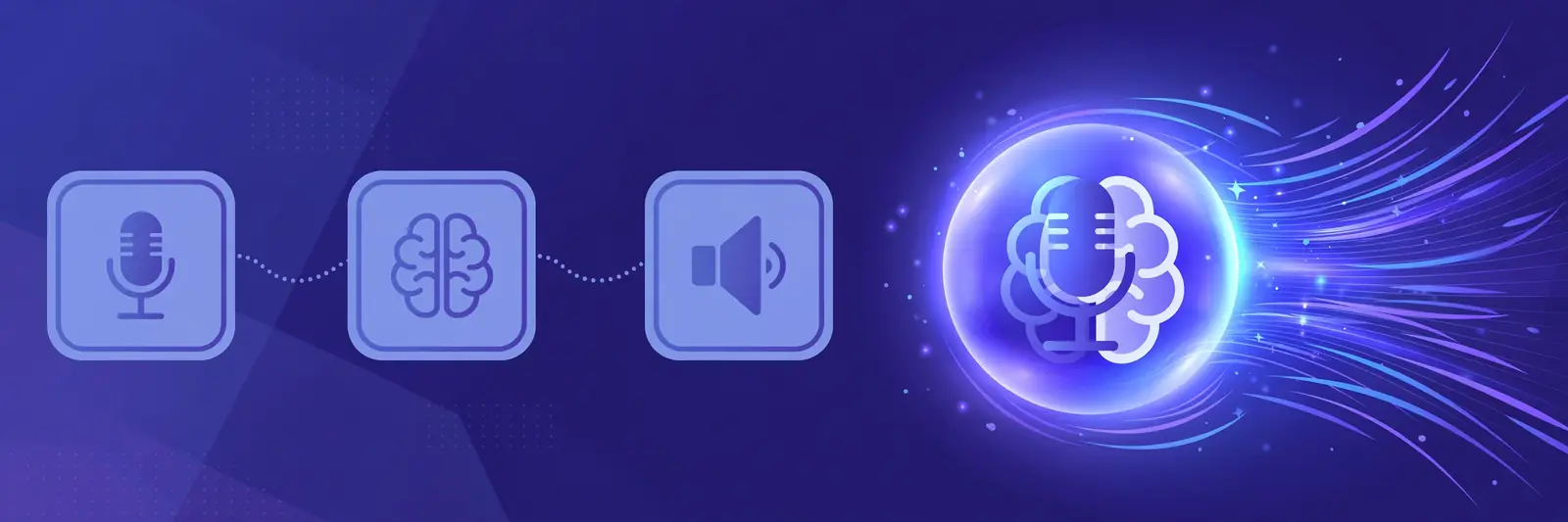
The old voice pipeline had three jobs, done by three separate systems:
- Transcription — turn what the caller said into text.
- Reasoning — a language model reads that text and decides what to say back.
- Speech synthesis — a voice model reads the answer out loud.
Each handoff cost time and introduced a chance to misread the moment. The classic failure is an agent that talks over you, or waits awkwardly because it can't tell a real pause from a "mm-hmm."
A speech-to-speech model does all three jobs inside one model. Audio goes in, spoken audio comes out, and turn-taking — knowing when you're done speaking versus just thinking out loud — is handled internally. According to ElevenLabs, its Mini model can tell a finished sentence from back-channel sounds like "mm-hmm." That sounds small. In a live conversation, it's the difference between natural and broken.
What ElevenLabs actually launched on October 20, 2026
Eleven Realtime comes in two versions:
- Eleven Realtime v1 Mini — the lower-cost option, built for natural everyday conversations: assistants, tutors, interactive characters, and simple voice features on a website or app.
- Eleven Realtime v1 Max — the heavier option, built for work where the agent must follow instructions, use software tools, and complete multi-step tasks, such as customer support or qualifying a caller.
Both cover more than 90 languages and can draw on over 17,000 voices from ElevenLabs' library. Both are available through the ElevenAgents platform or through a Realtime API that follows OpenAI's Realtime API protocol — which matters because teams already built on OpenAI's format can switch by changing the endpoint and model name, rather than rebuilding.
The headline numbers, reported by ElevenLabs from Artificial Analysis testing: Max answers in about 0.57 seconds on average, Mini in about 0.62 seconds. On a spoken-reasoning test of 1,000 questions, Max scored 98.8% and Mini 75.9%. On multi-step tool tasks, Max completed 87.1% against Mini's 60.3%.
One honest caveat: those are company-reported figures from a launch announcement, not independent long-term testing. The direction is real — one model is faster and more coherent than a three-piece chain — but treat the exact percentages as a launch claim, not a settled fact.
Speech-to-speech vs text-to-speech: which one do you need?
This is where most explainers lose non-developers, so here is the plain version:
- You need text-to-speech when you already have the words written: a video script, an audiobook chapter, a course lesson, a podcast intro. You paste text, you get audio. That is what TextToSpeechH does, free, with an MP3 you can use anywhere.
- You need speech-to-speech when the words don't exist yet because a real person is talking: a support call, a live tutor, an in-app assistant, a phone agent. The conversation is invented in real time, so the model has to listen and speak in the same loop.
ElevenLabs' own text-to-speech models, Eleven v4 and v4 Turbo, are still the right choice for narration work — they took the top two spots in Artificial Analysis' voice rankings in mid-October 2026. Realtime is the choice when the voice needs to hold a live conversation. Buying a live-conversation model to narrate a script is like hiring a receptionist to read an audiobook: it works, but you're paying for a skill you aren't using.
And if the blocker is ElevenLabs' pricing rather than the technology itself, our roundup of free ElevenLabs alternatives compares the no-cost tools side by side.
What this means for creators right now
Three practical consequences, in order of how soon they'll touch you:
- Voice agents are about to get much less robotic. Support lines, tutors, and in-app assistants built on the old three-piece chain will start feeling noticeably more natural as builders switch. If you run a business with a phone line, the next generation of voice agents is worth a trial, not a rebuild — the switching cost just dropped.
- Live translation is the sleeper use. A day after Realtime, ElevenLabs announced Realtime Translation in alpha: each person speaks their own language and hears translated speech back. For contact centres and live events, that removes the interpreter from the call. It's early and enterprise-only for now, but it's the clearest sign of where this goes.
- Your narration workflow doesn't change — yet. For recorded content, text-to-speech is still cheaper, more controllable, and easier to edit. Generate the voice from your script, listen, fix the lines that sound off, regenerate. The live-conversation models don't make that workflow obsolete; they cover the conversations you couldn't script in advance.
The business version of that shift is already on sale: Convoso's no-code voice agent answers and qualifies sales calls inside its outbound platform, no developer required. Our Convoso Voice AI Agent guide explains what it does on a call and what the first published results look like.
How to try the speech-to-speech idea free today
You can't use Eleven Realtime free from a browser tab — it's a developer product, accessed through ElevenAgents or an API. But you can test the two halves of the idea without paying:
- For the speaking half: write a 100-word script and generate it on TextToSpeechH. Listen for how natural the pacing is on a script written for the ear — short sentences, contractions, punctuation as pauses. That's the quality bar the live models are chasing in real time.
- For the listening half: try any free voice assistant on your phone and notice where it interrupts you or waits too long. That awkwardness is exactly what speech-to-speech models are built to remove. When you hear a voice agent that doesn't do it, you'll know the shift has arrived.
And if your work is narration rather than live conversation, skip the new thing entirely for now. A free text-to-speech tool, a good script, and an MP3 you own will do more for your next video than any realtime model.
By Mauhnish — I build TextToSpeechH and write these guides from what actually works when you test it, not from feature lists. If a step above didn't work the way I described, the tool changed — tell me and I'll fix the guide.
Frequently Asked Questions
What is speech-to-speech AI?
It's a single AI model that listens to spoken words and replies with spoken words directly, without separate transcription, language-model, and voice steps in between. ElevenLabs' Eleven Realtime, launched October 20, 2026, is the best-known example.
What is the difference between Eleven Realtime Mini and Max?
Mini is the cheaper option for natural everyday conversations like assistants and tutors. Max is built for complex work — customer support, lead qualification, multi-step tasks — and scores higher on reasoning and tool-use tests, at a higher price.
Is speech-to-speech the same as text-to-speech?
No. Text-to-speech turns written text into audio — what you need for narration, audiobooks, and video voiceovers. Speech-to-speech holds a live spoken conversation where the words aren't written in advance.
Can I use ElevenLabs Realtime for free?
Not as a casual browser tool — it's a developer product through ElevenAgents or an API, priced per minute plus token costs. For free narration work, a text-to-speech tool like TextToSpeechH is the practical alternative.
Does speech-to-speech replace text-to-speech?
No. Recorded narration still belongs to text-to-speech: it's cheaper, easier to edit, and gives you a file you can reuse. Speech-to-speech covers live conversations that can't be scripted in advance.
What about live speech translation?
ElevenLabs announced Realtime Translation in alpha on October 21, 2026 — each participant speaks their own language and hears translated speech back. It's enterprise-focused for now, but it's the most practical near-term use of the technology.
Sources & References
- W3C Web Accessibility Initiative — "Audio Content & Video Content" text-to-speech guidance: www.w3.org/WAI/media/av/av-content/
- Wikipedia — Speech Synthesis & Speech Recognition: en.wikipedia.org/wiki/Speech_synthesis
- van den Oord et al. — WaveNet: A Generative Model for Raw Audio: arxiv.org/abs/1609.03499
- Shen et al. — Natural TTS Synthesis by Conditioning WaveNet on Mel Spectrogram Predictions (Tacotron 2): arxiv.org/abs/1712.05884
- Google — Neural Text-to-Speech & AI Overview documentation: cloud.google.com/text-to-speech