
Convoso Voice AI Agent is a no-code voice agent that answers and qualifies sales calls for you, then hands the ready buyers to a human. It went generally available on November 2, 2026, built into Convoso's outbound sales platform — so instead of buying a separate voice AI tool, your AI calls, your human calls, and your campaign reports all live in one place.
That last part is the whole pitch, and it is worth slowing down for. Most voice AI products give you a voice and leave you to wire it into your dialer, your CRM, and your compliance rules yourself. Convoso did the opposite: it put the agent inside the platform its customers already call from, so the agent inherits the campaign workflows, the reporting, and the do-not-call checks that a contact centre already runs on.
Quick Answer: Convoso Voice AI Agent in One Box
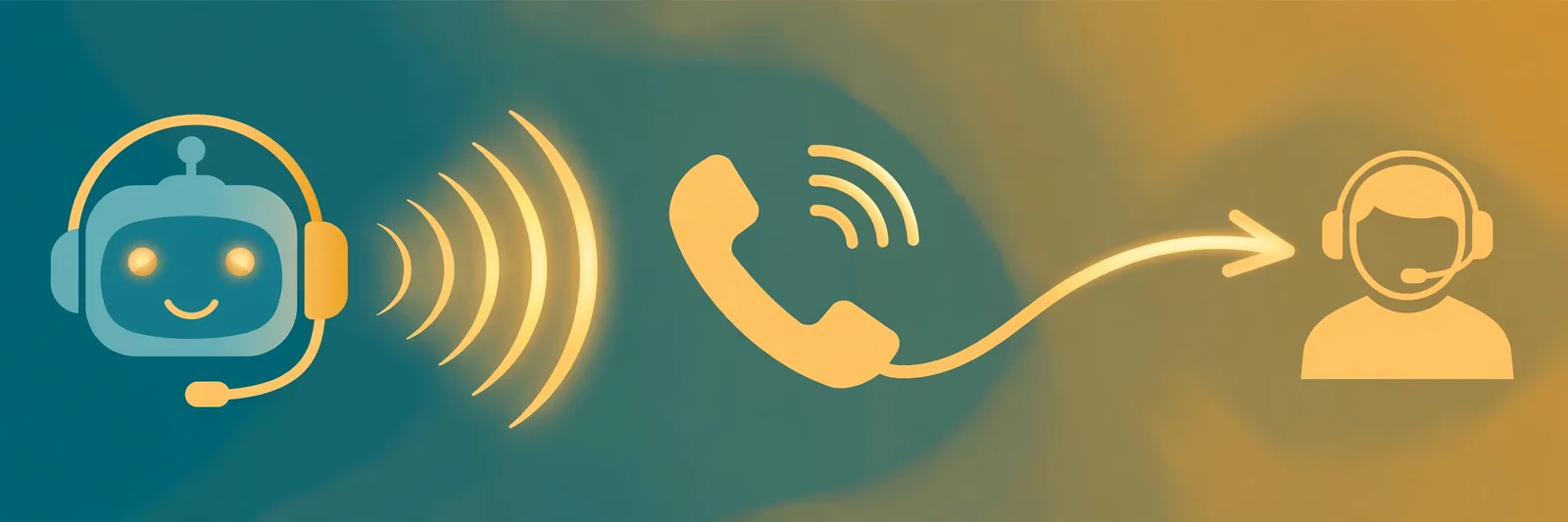
Convoso Voice AI Agent is a no-code AI phone agent for sales teams: it greets prospects, asks qualifying questions, books appointments, answers routine questions, and warm-transfers qualified leads to a human agent. It responds in about 600 milliseconds, offers 700+ voices, and runs inside Convoso's outbound platform rather than as a standalone tool.
What it actually does on a call
The agent covers the first few minutes of a sales call — the part that is repetitive, high-volume, and expensive to staff. In Convoso's words, it handles "repetitive initial engagement and qualification so experienced salespeople can spend more time with qualified prospects who are ready for the next step."
Concretely, that means four jobs:
- Outbound lead qualification. It calls a lead, confirms interest, asks the screening questions, and passes only the warm prospects to your team.
- Inbound call handling. It answers incoming calls, identifies what the caller needs, and routes them to the right department instead of leaving them on hold.
- Appointment scheduling. It books meetings during the conversation rather than promising a callback.
- Routine questions. It answers the FAQs that eat up your team's day, and escalates anything it cannot handle.
Two details matter more than the feature list. First, the agent is trained on 20 million real sales conversations, according to Convoso's announcement — that is why it is pitched at objection handling and interruptions, not just reading a script. Second, it switches languages mid-call, which matters for any team calling a mixed-language market.

The one early result worth reading
Convoso published a single early-customer test, and it is small enough to be believable. During an initial 36-hour test, Tort Intake Professionals made more than 150 contacts with the agent, and approximately 10–12% of those contacts were validated and warm-transferred to human specialists. The team then expanded testing into more advanced lead-screening workflows.
Read that honestly: 10–12% is not a miracle number, it is a first-test number. But it is a real number from a named customer, and it tells you what this product is for — filtering a large pile of contacts down to the tenth that deserve a human's time. If your team already answers every call personally, this is not your problem. If your team misses calls because everyone is busy with customers in front of them — the exact situation Convoso describes at Ace Building Materials, a family-owned supplier — then the missed-call pile is the problem this solves.
Convoso CEO Nima Hakimi put the strategy plainly at launch: "Voice AI will handle a growing share of outbound conversations, and the companies that win will run it inside a platform built for outbound." That sentence is the bet: voice AI wins not as a clever demo, but as a boring, reliable part of the calling operation.
No-code, but not no-work
"No-code" here means you do not write code — it does not mean you do nothing. Convoso's Auto Workflow can build qualification flows from your historical call recordings instead of making you script every path from scratch, but you still have to decide the questions, the disqualification rules, and the handoff moment. A voice agent that qualifies badly is worse than no agent at all, because it burns leads your team would have closed.
Three things to set before you launch anything like this:
- The handoff trigger. Decide the exact answer that moves a caller to a human — a budget confirmation, a booked appointment, a specific question — and test it with real calls, not just the demo.
- The compliance guardrails. Convoso bakes in do-not-call checks, state dialing restrictions, time-of-day rules, and PII redaction. Confirm which of those are on by default for your account, because "built in" and "switched on" are not always the same thing.
- The fallback voice. If the agent misunderstands twice, the caller should reach a human or a callback offer — not a third attempt at the same question.
How it compares to the voice agent you already read about
If you followed yesterday's guide to ElevenLabs Realtime, the contrast is the point. ElevenLabs gives developers a speech-to-speech model to build on — you supply the platform, the dialer, and the compliance. Convoso gives sales teams a finished product — you supply the leads and the questions. One is an engine, the other is the whole car. A developer building a custom voice product should look at ElevenLabs first; a business owner who just wants fewer missed calls should look at Convoso first. Our ElevenLabs Realtime guide explains the model side, and our speech-to-speech explainer explains the technology underneath both. And for plain narration instead of phone calls, our ElevenLabs alternatives guide compares the free text-to-speech tiers worth your time.
What this means for you right now
If you run a small business, the honest read is this: you probably do not need a voice AI agent this week. But if missed calls are already costing you customers — the phone rings while you are with a client, and nobody calls back — then a no-code agent is now a real option, not a future one. You can test the idea yourself before spending anything: Convoso offers a demo line at 855-CONVO-AI, where you can hear the agent handle a call.
And if your need is simpler — you just want a voiceover for a video, a podcast, or an ad, with no phone system involved — that part is already free. Paste your script into TextToSpeechH, pick a voice, and download the MP3 in your browser. Voice agents are the future of phone calls; a free voiceover in your browser is the present of everything else.
By Mauhnish — I build TextToSpeechH and write these guides from what actually works when you test it, not from feature lists. If a step above didn't work the way I described, the tool changed — tell me and I'll fix the guide.
Frequently Asked Questions
Do I need to write code to use Convoso Voice AI Agent?
No. Convoso built it as a no-code product: you set up qualification workflows from existing call recordings instead of scripting every path yourself. You still choose the voice, the questions, and the handoff rules, but you do not need a developer to launch it.
How is this different from ElevenLabs Realtime?
ElevenLabs Realtime is a model developers build on; Convoso Voice AI Agent is a finished sales product built into an outbound dialing platform. One gives you the engine, the other gives you the whole call operation — campaign workflows, compliance controls, and reporting — with the voice agent already wired in.
Will an AI agent annoy my leads?
It can, if it sounds robotic or refuses to hand over. Convoso's answer is interruption handling, sub-second replies, and warm transfers to a human the moment a prospect is qualified. The honest test is simple: call the demo number yourself, act like a sceptical prospect, and judge whether you would stay on the line.
What does it cost?
Convoso has not published pricing for the Voice AI Agent; it sells through its outbound platform, so cost depends on your call volume and existing plan. Request a demo through Convoso's product page and ask for per-minute or per-seat pricing before you compare it with a standalone voice-agent tool.
Sources & References
- W3C Web Accessibility Initiative — "Audio Content & Video Content" text-to-speech guidance: www.w3.org/WAI/media/av/av-content/
- Wikipedia — Speech Synthesis & Speech Recognition: en.wikipedia.org/wiki/Speech_synthesis
- van den Oord et al. — WaveNet: A Generative Model for Raw Audio: arxiv.org/abs/1609.03499
- Shen et al. — Natural TTS Synthesis by Conditioning WaveNet on Mel Spectrogram Predictions (Tacotron 2): arxiv.org/abs/1712.05884
- Google — Neural Text-to-Speech & AI Overview documentation: cloud.google.com/text-to-speech