
Hume AI is ending its Octave text-to-speech and EVI voice APIs on November 13, 2026, and any data left in your account is permanently deleted after that date. If you use Octave or EVI today, you need a replacement live before the cutoff — and you need to download your audio, transcripts, and voice recordings first.
Quick Answer: Hume AI Alternatives in One Box
Hume's Octave TTS and EVI APIs shut down on November 13, 2026 at 12:01 a.m. EST, but the company itself continues with voice-evaluation products. The best free replacements are TextToSpeechH for instant browser-based voiceovers, ElevenLabs' free plan for the most natural voices, Cartesia Sonic for developers, and Fish Audio, Kokoro, and Chatterbox for open-weights options. Start by saving everything in your Hume account — cloned voices do not transfer.
Save first, shop second. That order matters because of one detail people miss: voices you designed or cloned on Octave live on Hume's servers and do not export. Keep the original recordings — you will need them to recreate each voice anywhere else. The checklist is short: download generated audio, EVI chat transcripts and logs, and every source recording you used for cloning. Do it before November 13, because after that date Hume deletes account data permanently, according to its October 2, 2026 notice.

What actually shut down (and what did not)
Hume announced on October 2, 2026 that access to its text-to-speech (Octave) and Empathic Voice Interface (EVI) APIs ends on November 13, 2026 at 12:01 a.m. EST, with both staying fully supported until then. The company itself is not closing: it now sells VoiceEQ, a platform for evaluating voice AI, along with expression measurement APIs.
The backstory explains the timing. In January 2026, Google DeepMind hired Hume's founder Alan Cowen and the core research team to work on Gemini voice under a technology licensing deal; Hume continued as an independent company under CEO Andrew Ettinger. Its standalone Expression Measurement API had already been shut down in June 2026. Octave and EVI are the last pieces to go.
Hume is not the only voice service disappearing this year. OpenAI retires its text-to-speech API models on January 6, 2027, Resemble AI stopped selling voice AI to new customers in August, PlayHT's sites no longer load after Meta bought it, and LOVO's parent company filed for Chapter 7 bankruptcy in May 2026. If your stack depends on a single voice vendor, this is the year to learn the lesson: keep a second option warm.
1. TextToSpeechH — the fastest free replacement for making audio
If what you actually did with Octave was turn text into spoken audio — voiceovers, narration, audio for videos — start here. Paste your text, pick a voice, download the MP3. It is free, needs no sign-up and no credit card, works in 12+ languages, and handles up to 10,000 words per request.
The catch, stated plainly: this is a browser tool, not an API. If your code calls Octave, this does not replace that call — it replaces the human job of making audio by hand. For developers, options 2 and 3 below are the real replacements; for everyone making audio themselves, this is the zero-setup answer. Try it free with our text to speech tool.
2. ElevenLabs — the most natural voice, with a free plan
ElevenLabs is the default replacement most Octave users will land on, and the listening tests back that up: its Eleven v4 and v4 Turbo models hold first and second place on the Artificial Analysis text-to-speech leaderboard, in 90+ languages. The free plan covers 10,000 characters a month, and paid plans start around $4.17 a month billed annually.
For expressive narration, test v4 or v3; for low-latency streaming, test v4 Turbo or Flash v2.5. Prices are $0.08 per 1,000 characters for v4 and $0.04 for v4 Turbo, according to ElevenLabs' API pricing page checked November 3, 2026.
The catch: the free allowance is small — one long article can eat it — and ElevenLabs is a paid product at heart. But if naturalness is what you miss most about Octave, this is the closest match, and its voice-agent platform is also the most complete EVI replacement.
3. Cartesia Sonic — the developer pick, and the numbers favor it
Cartesia built the most useful shutdown guide of any vendor, and its model has the numbers to back the pitch: Sonic 3.6 scores 1284 on the Artificial Analysis Provider Voice leaderboard from October 2026, against 1051 for Octave 2 and 1039 for Octave TTS, in blind listening tests. It answers in under 90 milliseconds and covers 44 languages.
The catch: Sonic is an API for developers building voice applications, not a paste-and-go tool. If you are replacing Octave in code, test it on your own scripts first — and price it on your actual Octave character volume, not on Octave's old plans, which end with the API.
4. Fish Audio — open weights, 80+ languages, cheap at scale
Fish Audio's Drama 3 is the best open-weights voice model on the Artificial Analysis leaderboard right now, with an Elo score of 1278, 83 languages, and up to 16 speakers in a single script — the multi-speaker drama angle no other free option touches. Its S2 model runs as a hosted API at about $15 per million characters with voice cloning from a 10-second clip.
The catch: Drama 3 is a 35-billion-parameter model benchmarked on data-center GPUs, so self-hosting it means a rented card, not a laptop. And its license caps free commercial use at $500,000 in revenue with no hosted service under that tier. Read the license file before you ship anything.
5. Kokoro-82M — free forever, runs on an ordinary PC
Kokoro is the smallest model on this list — 82 million parameters — and the most practical free one: it runs on CPU, needs no GPU, and is Apache 2.0 licensed, which means free even for commercial use. It ships 54 preset voices across 8 languages and narrates clearly enough for audiobooks and study material.
The catch: it cannot clone a voice. You get the voices it ships with, and they sound flatter than Octave's expressive output. But for bulk narration with zero running cost and zero account, nothing else on this list is as simple.
6. Chatterbox Multilingual V3 — free cloning from a short clip
If the Octave feature you miss most is cloning a voice from a few seconds of audio, Chatterbox is the free answer: it clones from a short clip, covers 23 languages, and is MIT licensed. The Nano variant (110 million parameters, English) even runs on CPU.
The catch: full-quality cloning wants a GPU, and Chatterbox watermarks its outputs. For a personal project or a prototype, that is a fair trade; for client work, check the watermark terms first.
7. Google Gemini TTS — 130+ languages with a free tier
Google's Gemini 3.8 Flash TTS covers 130+ languages, ranks first on the rival Design Arena leaderboard, and has a free tier in the Gemini API — which makes it the widest-reaching free option here. Given that Google DeepMind hired Hume's founding team to work on Gemini voice, this is, in a sense, where part of Octave's DNA went.
The catch: it is an API, so expect setup work, and Google's Gemini TTS prices are scheduled to rise on January 1, 2027, according to the November 2 roundup that tracked the change. Check the current price before you commit to it as your long-term home.
Replacing EVI is a different job than replacing Octave
Octave turned text into speech, so any TTS API replaces it. EVI was a full speech-to-speech voice interface — it listened, understood tone, and answered with matching expression. Replacing it takes speech recognition, turn detection, a language model, and speech output together, either as separate pieces or as one agent platform.
The realistic options are ElevenLabs Conversational AI (or its new Eleven Realtime models, launched October 20, 2026, at $0.08 per minute plus LLM usage), Cartesia Managed Agents (ranked first of 30 on the Artificial Analysis Speech Agent Arena at a $0.03-per-minute launch price), or OpenAI's Realtime API. Test interruptions and tool behavior on your own calls before you switch — a demo that handles a scripted call is not proof it handles a real one.
There is a real reason to take the voice-agent path seriously. In a study ElevenLabs published on November 2, 2026, voice agents succeeded 32% more often than chat once a conversation passed two minutes — the analysis covered 469 agents running both voice and chat in production from May to July 2026. As ElevenLabs put it on X: "When the conversation gets complex, voice is the fastest path to resolution." Short chats still favor text; long, messy conversations favor voice.
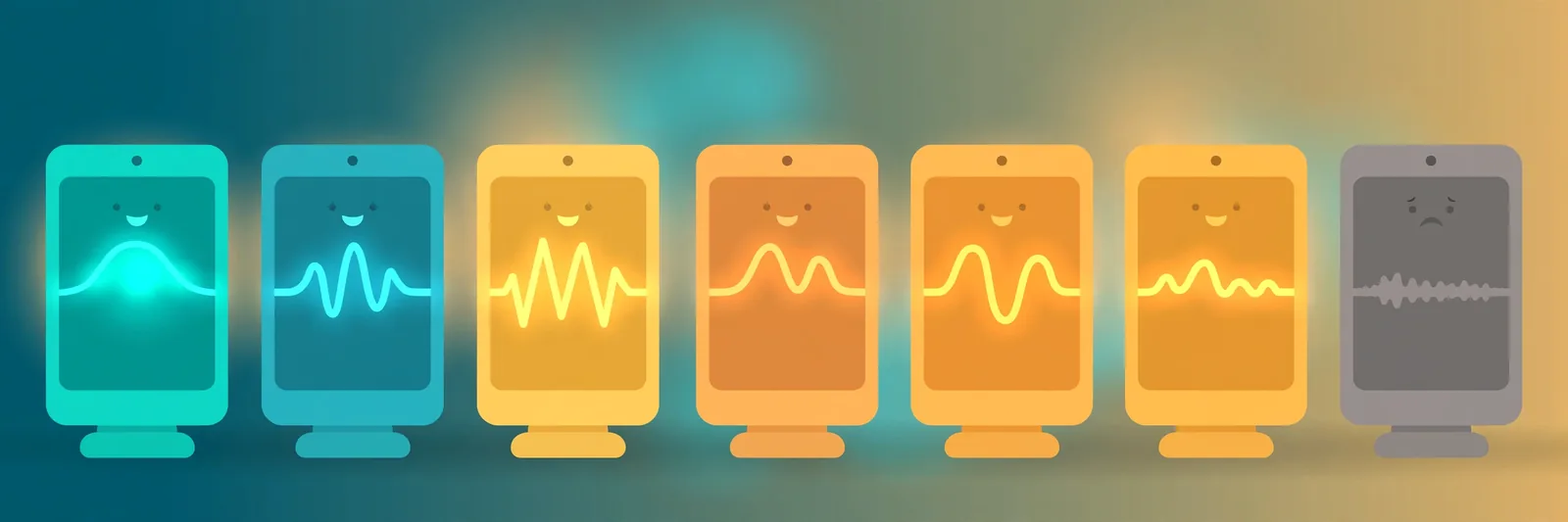
The seven tools at a glance
| Tool | Cost | Best for | Honest catch |
|---|---|---|---|
| TextToSpeechH | Free, no sign-up | Instant voiceovers and MP3s in the browser | Not an API — it replaces the human job, not the code call |
| ElevenLabs | Free plan; paid from ~$4.17/mo | Most natural voices; best EVI replacement | Free allowance is small (10,000 chars/mo) |
| Cartesia Sonic 3.6 | Free tier (20,000 chars/mo, non-commercial); paid from $5/mo | Developer TTS; fastest first audio | API only, no paste-and-go tool |
| Fish Audio | Free (open weights); hosted API ~$15 per 1M chars | Multi-speaker drama; 80+ languages | Drama 3 needs a big GPU to self-host |
| Kokoro-82M | Free (Apache 2.0) | Free narration on any PC | Preset voices only, no cloning |
| Chatterbox V3 | Free (MIT) | Free voice cloning from a short clip | Needs a GPU for best quality; outputs watermarked |
| Google Gemini TTS | Free tier in Gemini API | Widest language coverage (130+) | API setup; prices scheduled to rise Jan 1, 2027 |
What not to pick
A few names still show up in old "Hume alternatives" lists that you should skip. PlayHT's sites no longer load after Meta's acquisition, so any guide still recommending it is out of date. LOVO's parent company filed for Chapter 7 bankruptcy in May 2026 and its site has been offline since at least August. Resemble AI stopped selling voice AI to new customers in August to focus on deepfake detection — though its open-source Chatterbox model lives on, which is why Chatterbox appears above and Resemble itself does not.
Try the free replacement now
Hume's shutdown is a deadline, not a disaster — but only if you move before November 13. Save your audio, transcripts, and voice recordings today, then test a replacement on a real script. If you just need spoken audio without an API, our free text-to-speech tool is ready now: paste your text, pick a voice, and download the MP3 — no sign-up, no card, and the limit is stated plainly: up to 10,000 words per request.
By Mauhnish — I build TextToSpeechH and write these guides from what actually works when you test it, not from feature lists. If a step above didn't work the way I described, the tool changed — tell me and I'll fix the guide.
Frequently Asked Questions
Is Hume AI shutting down completely?
No. Only the Octave text-to-speech and EVI voice APIs end, on November 13, 2026. Hume the company continues, now selling VoiceEQ, a platform for evaluating voice AI, along with expression measurement APIs. If you only used Hume's evaluation products, nothing changes for you — but if your code calls Octave or EVI, it stops working on the cutoff date.
What happens to my Hume account data after November 13, 2026?
Hume says any data left in your account is permanently deleted after that date. Download generated audio, EVI chat transcripts, and logs before the cutoff, and — most importantly — save the original recordings you used to clone voices, because cloned Octave voices do not transfer to any other service and cannot be rebuilt without those recordings.
What is the best free alternative to Hume Octave?
It depends on the job. For turning text into audio by hand, TextToSpeechH is free with no sign-up and downloads MP3s instantly. For the most natural voices, ElevenLabs' free plan is the closest match. For developers replacing Octave in code, Cartesia Sonic and Fish Audio are strongest, and Kokoro is the best free model that runs on your machine.
Can I move my cloned Octave voices to another service?
No. Voices you designed or cloned on Octave live on Hume's servers and do not export to any other platform. Your only path is to keep the original recordings and recreate each voice on the new service — ElevenLabs, Fish Audio, and Chatterbox all clone from short clips. Do this before November 13, while your Hume account still exists.
What replaces Hume EVI for voice agents?
EVI combined listening, a language model, and expressive speech in one interface, so a plain TTS API is not enough. The replacements are ElevenLabs Conversational AI or Eleven Realtime, Cartesia Managed Agents, and OpenAI's Realtime API. Test each on your calls, especially interruptions and tool use: a voice agent that only handles scripted demos will fail on real conversations.
Sources & References
- W3C Web Accessibility Initiative — "Audio Content & Video Content" text-to-speech guidance: www.w3.org/WAI/media/av/av-content/
- Wikipedia — Speech Synthesis & Speech Recognition: en.wikipedia.org/wiki/Speech_synthesis
- van den Oord et al. — WaveNet: A Generative Model for Raw Audio: arxiv.org/abs/1609.03499
- Shen et al. — Natural TTS Synthesis by Conditioning WaveNet on Mel Spectrogram Predictions (Tacotron 2): arxiv.org/abs/1712.05884
- Google — Neural Text-to-Speech & AI Overview documentation: cloud.google.com/text-to-speech