
Quick Answer: What Is Grok Voice 3.0?
xAI's Grok Voice 3.0 (announced October 14, 2026) is a developer API for building real-time voice agents — not a free voiceover tool you can open in your browser. If you searched "grok voice" hoping for free AI voiceovers, what you actually want is a text-to-speech tool: TextToSpeechH turns any text into natural AI voiceovers in 12+ languages, no sign-up, MP3 download included.
Yesterday, xAI dropped Grok Voice 3.0 — its new speech-to-speech AI model — and it immediately topped the independent benchmarks. If you're searching for "grok voice" because you want free AI voiceovers, though, here's the part nobody says clearly: Grok Voice 3.0 is not a tool you can open in your browser. It's a developer API. Let's untangle what it actually is, what it costs, and what you can use for free instead.
Need AI voice audio right now? TextToSpeechH's free text-to-speech tool turns any text into natural AI voiceovers in 12+ languages — no sign-up, up to 10,000 words per session, MP3 download included. More free options below.
1. "Grok voice" actually means three different things
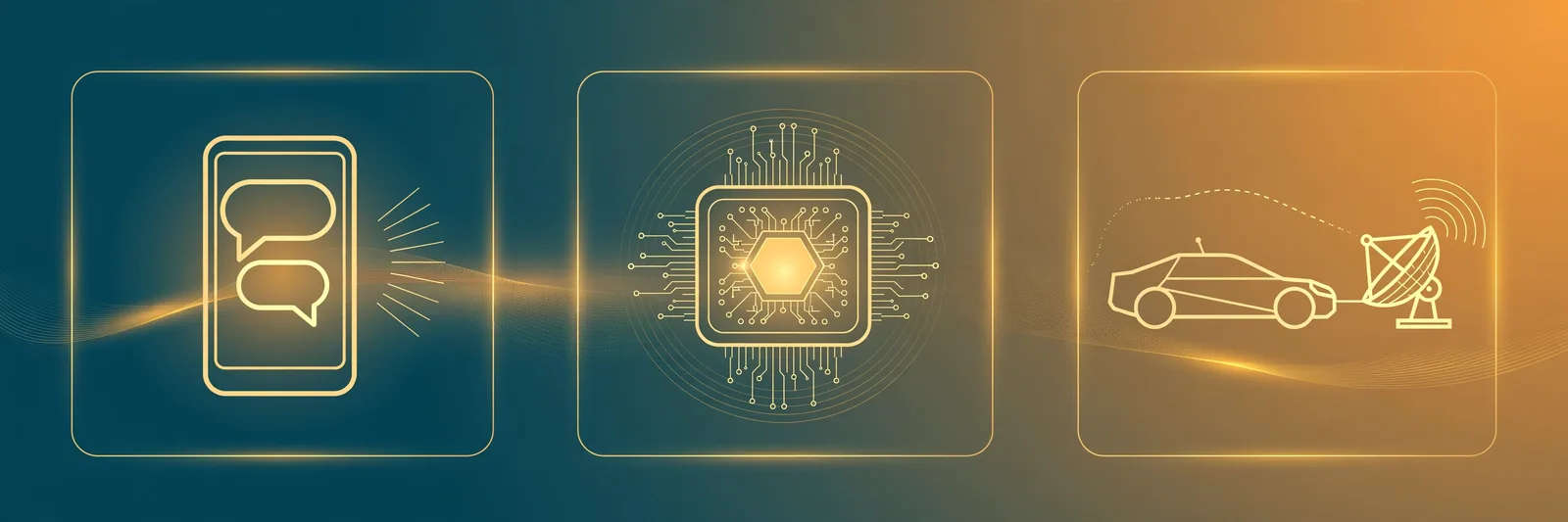
This is the source of 90% of the confusion, so let's sort it out first:
- Grok Voice Mode — the voice chat feature inside the Grok app (iOS, Android, web). You talk, it talks back. This one has a free tier.
- Grok Voice 3.0 — the new model announced October 14, 2026. It's the engine behind voice agents, sold through xAI's Voice Agent API to developers. You can't "try it" on a website — you build with it.
- Grok voice agents — the products built on it: Tesla's in-car assistant, Starlink's customer support lines, that kind of thing.
If you're a creator looking to make voiceovers, you want option 1 or a dedicated text-to-speech tool — not the API.
2. What Grok Voice 3.0 actually is
In one sentence: a model that listens to human speech and replies with human-sounding speech, in real time, over a single connection — no separate transcription, thinking, and speaking steps bolted together.
The facts xAI announced:
- Speech-to-speech, bidirectional. It handles interruptions and pauses like a real conversation (xAI reports 97% on the Full Duplex Bench, which tests exactly that).
- Benchmark-topping. Independent tester Artificial Analysis scored it 86.9 on its Speech-to-Speech Index — ahead of OpenAI's GPT-Live-1 (83.2) and Google's Gemini 3.8 Live (82.6). These are xAI's reported numbers from the Oct 13, 2026 benchmark run.
- Sub-second latency. Built for live phone calls and in-car assistants where a 2-second pause kills the illusion.
- $0.08 per minute ($4.80/hour) — unchanged from Voice 2.0, which is now deprecated. Developers on the
grok-voice-latestalias were switched over automatically on October 14.
The honest caveat: it's a B2B product. Unless you're wiring a voice agent into an app or a phone system, this launch doesn't change what you can do today — it changes what developers can build for you tomorrow.
3. What it costs (and why there's no free version)
Grok Voice 3.0 is priced like infrastructure: $0.08/minute of conversation, billed to the developer. There's no free tier of the API, no demo page, no "try Grok Voice 3.0 online" — and if you find a site claiming to offer it free, that's a red flag.
The consumer side is different: the Grok chatbot's Voice Mode is free on iOS (reportedly capped around 100 voice queries a day, resetting at midnight UTC), with higher limits on paid plans. But that's the older conversational voice — not the new 3.0 model talking to you directly.
4. 5 free alternatives if you just want AI voice audio
Here's the thing most "Grok voice" searches are actually after: turning text into spoken audio without paying. None of these need Grok at all.
1. TextToSpeechH (free, no sign-up)
This is ours, and here's the honest pitch: paste your text, pick a voice, download the MP3 — up to 10,000 words per session, 12+ languages, no account. If your goal was "I want AI to read my script out loud," this does it in about 30 seconds. Try it here.
The catch: it's text-to-speech, not a conversation partner. It reads what you write; it doesn't chat back.
2. Grok app Voice Mode (free tier)
If you specifically want to talk to Grok, the app's Voice Mode is free on iOS with daily limits. Good for testing what conversational AI feels like, dictation-style brainstorming, or just curiosity.
The catch: it's a chatbot with a voice, not a voiceover studio. You can't type a script and get a clean MP3 out of it.
3. ElevenLabs (free plan)
The quality benchmark everyone else is chasing. The free plan gives you 10,000 credits a month — enough for short projects — and the new v4 model takes direction tags like [laughter]. We covered the free route in detail here.
The catch: voice cloning and commercial use need a paid plan, and credits burn fast on long audio. For the full free landscape beyond ElevenLabs, see our 7 free ElevenLabs alternatives compared.
4. Suno Speech (free plan)
Suno's new Speech feature generates spoken voice plus original background music as one track — genuinely different from everything else on this list. If you're making narrated intros, bedtime stories, or motivational audio, the music-voice combo in a single generation is a real time-saver. Full breakdown here.
The catch: downloads are capped on the free plan, and for anything commercial, wait for written terms.
5. TTSMaker (free tier)
A straightforward free text-to-speech site with PDF upload and MP3 download. Useful if your source material is a document rather than pasted text.
The catch: free tiers on these sites change constantly — check the current limits before you build a workflow around one.
5. Who should actually care about Grok Voice 3.0
- Developers building voice agents — support lines, appointment booking, in-app assistants. This is the target audience, full stop.
- Businesses with phone volume — xAI says Starlink's call centers run 20,000 calls a day on Grok Voice with ~70% resolved without a human (their numbers, not independently verified). If that matches your reality, the $4.80/hour math is interesting.
- Curious creators — worth knowing about, not worth waiting for. The voice-agent wave is real, but your next voiceover doesn't need it. This YouTube voiceover guide covers the workflow that works today.
The bottom line: Grok Voice 3.0 is a legitimately impressive model — benchmark-topping, same price as before, clearly aimed at owning the voice-agent infrastructure layer. But if you searched "grok voice" hoping for a free voice generator, the API was never going to be your answer. For actual voiceovers, the free tools above get you there today — starting with ours, no sign-up needed.
Frequently Asked Questions
Q1: Is Grok Voice 3.0 free?
No. It's a developer API priced at $0.08/minute with no free tier. The free product called "Grok voice" is the Voice Mode inside the Grok chatbot app — a different product.
Q2: How can I try Grok Voice 3.0?
Honestly? You probably can't, unless you're a developer — there's no public demo. The closest consumer experience is the Grok app's Voice Mode. For AI voiceovers, a free text-to-speech tool like TextToSpeechH does the job today.
Q3: What's the difference between Grok Voice Mode and Grok Voice 3.0?
Voice Mode is the talk-to-the-chatbot feature in the Grok app. Voice 3.0 is the new speech-to-speech model xAI sells to developers through its Voice Agent API. Same brand, different products, different audiences.
Q4: Can I use Grok Voice for YouTube voiceovers?
Not directly — there's no type-text-get-voiceover interface. For YouTube narration, use a text-to-speech tool; our guide to text to speech for YouTube covers the workflow.
Q5: Is Grok Voice 3.0 better than ElevenLabs?
Different jobs. Grok Voice 3.0 wins at real-time conversation (phone calls, voice agents). ElevenLabs wins at voiceover quality and control for recorded content. Pick the tool that matches the job.
Sources & References
- W3C Web Accessibility Initiative — "Audio Content & Video Content" text-to-speech guidance: www.w3.org/WAI/media/av/av-content/
- Wikipedia — Speech Synthesis & Speech Recognition: en.wikipedia.org/wiki/Speech_synthesis
- van den Oord et al. — WaveNet: A Generative Model for Raw Audio: arxiv.org/abs/1609.03499
- Shen et al. — Natural TTS Synthesis by Conditioning WaveNet on Mel Spectrogram Predictions (Tacotron 2): arxiv.org/abs/1712.05884
- Google — Neural Text-to-Speech & AI Overview documentation: cloud.google.com/text-to-speech