
Quick Answer: Can an AI Voice Carry a Commercial?
Yes, an AI voice can carry a commercial, and for most small-business ads it now beats the realistic alternative, which is the owner reading the script into a phone in a noisy shop. The voice itself is the easy part. What decides whether your ad works is three things most tool pages never mention: whether you're actually allowed to use that audio in a paid ad, whether your script fits the time slot, and whether the voice matches what you're selling. This guide covers all three, then the tools.
The rights question nobody mentions
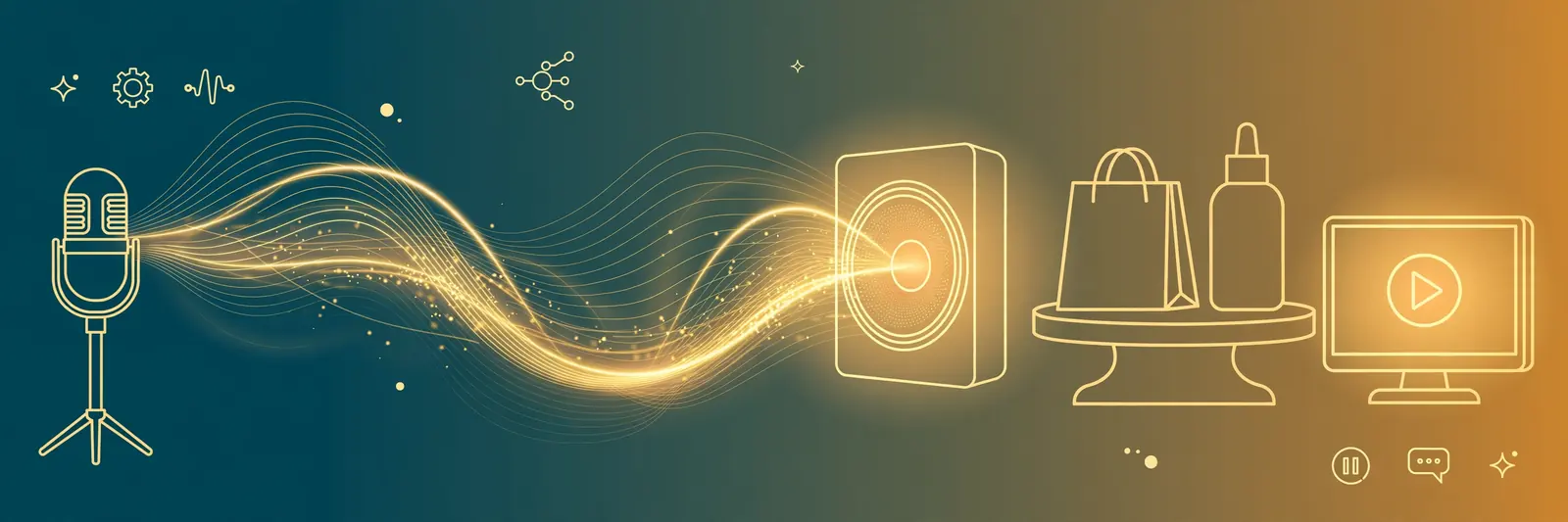
Here is the trap. Almost every free text to speech tool lets you download an MP3, and almost every free tier's terms limit that audio to personal use. Putting the file into a paid Facebook, YouTube or radio ad is commercial use. If the tool's terms don't grant commercial rights, your ad is built on audio you don't have the right to run.
Before you generate anything for an ad, check three things:
- The tool's terms. Look for the words "commercial use" in the plan you're actually on, not the plan in the marketing headline. On most platforms, commercial rights start at the first paid tier.
- The platform's rules. Meta and YouTube both require AI-generated content in ads to be disclosed in some situations, and a cloned voice of a real person without their consent is a hard no everywhere — our guide to whether AI voice cloning is legal covers where the lines actually sit.
- Your own industry's rules. Finance, health and education ads carry extra advertising standards in most countries. An AI voice doesn't change what you're allowed to claim.
None of this means "don't do it." It means spend ten minutes on the terms page before you spend money promoting the ad. That is the cheapest insurance in this whole process.
How long is a 30-second ad, in words?
Ad scripts fail on timing more than on wording. Voice actors read at roughly 150 words a minute for a calm read, a bit faster for an energetic one. Use these numbers and your voiceover will fit the slot instead of getting chopped:
- 15-second spot: 35 to 40 words. One hook, one offer, one call to action. Nothing else fits.
- 30-second spot: 75 to 85 words. Hook, two supporting points, offer, call to action.
- 60-second spot: 150 to 160 words. Room for a short story or a problem-and-solution arc.
Write to the count, not to the clock. Generate the voice, listen once, and if the ending feels rushed, cut words rather than speeding the voice up. A faster voice makes an ad sound desperate; a shorter script makes it sound confident.
Pick the voice for the product, not for your taste
The most common mistake in AI ad voices is picking the voice the owner likes instead of the voice the customer trusts. A useful way to decide:
- Local retail, food, salons, services: warm and conversational beats polished. The ad should sound like a person from the customer's own town, not a national brand.
- Finance, insurance, B2B, anything asking for trust: a calmer, slightly slower voice, lower energy. Excitement reads as risk in these categories.
- Sales events, launches, limited offers: this is the one place energy works. A brighter, faster voice matches the "this week only" message.
- Health and wellness: soft and unhurried. If the voice sounds like it's selling, the ad has already lost.
Whatever you pick, audition the same script in three voices before deciding. The differences are obvious within two lines, and this ten-minute step is where good ads separate from average ones.
The workflow, start to finish
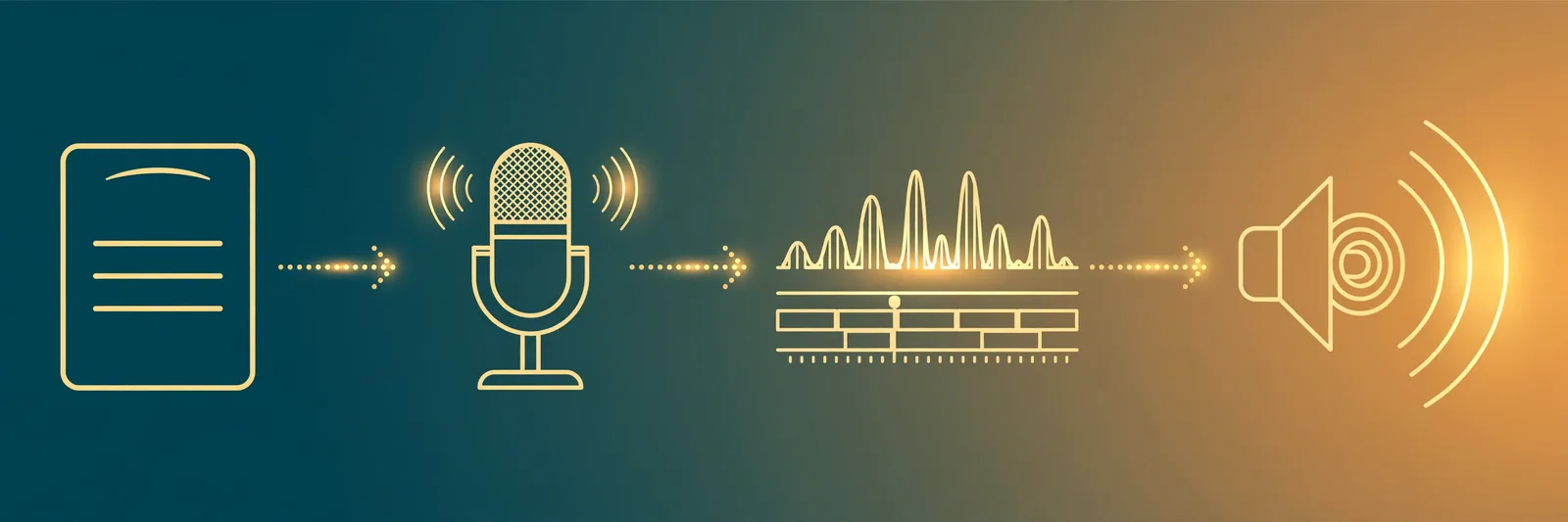
- Write the script to the word count above. Read it out loud yourself once. If you stumble, the voice will too.
- Generate it in two or three voices. Keep the settings plain at first: normal speed, no effects. Judge the read, not the processing.
- Fix pronunciation, not the script. Brand names and place names are where AI voices slip. Respelling a word the way it sounds usually fixes it in one try.
- Add pauses where you want emphasis. A short pause before the offer and before the call to action does more for an ad than any tone setting.
- Put music under it, quietly. Music at a level where you can still hear every word clearly. If a line gets buried, the music is too loud, full stop.
- Export and check on a phone speaker. Most of your audience will hear the ad there, not on your headphones. If it sounds clear on a phone in a noisy room, it's ready.
The tools, honestly
If you want the full landscape first, our best free text to speech tools roundup compares the free tiers properly. For commercials specifically, here is the honest split:
- TextToSpeechH (our tool). Full disclosure, this is ours. It's free in the browser with no sign-up, and for drafting an ad voice it's hard to beat: paste the script into our text to speech tool, try several voices in a minute, hear what works. Where to be careful: check the current terms before running any file in paid media, the same advice we'd give for any free tool. Use it to find your voice and your read, even if you produce the final file elsewhere.
- ElevenLabs. The most expressive reads here, and expression matters in ads more than in narration. Paid, priced by characters, and commercial use depends on your plan. If the ad is the centrepiece of a campaign, this is the quality benchmark.
- Murf. A studio-style editor with a commercial workflow, ad-friendly voices and clear plan terms. Good middle ground if you make ads regularly and want the rights question answered cleanly in the plan page.
- VEED and the video-editor tools. If your ad is a video and you live inside a video editor anyway, the built-in voiceover tools (VEED, CapCut) save a step. The voices are a step behind the dedicated tools, but the workflow is one window instead of three — and if the video is headed to YouTube, our text to speech for YouTube guide covers the voiceover side end to end.
- A human voice actor. Still the right answer sometimes: a beloved local radio voice, a mascot character, anything where the specific person is the brand. Expect a real booking process, real fees that vary a lot by market and usage, and revision rounds. For a one-off 30-second local spot, many businesses find the AI route gets them 90 percent of the result this week instead of next month. For a flagship brand campaign, hire the human.
Mistakes that quietly kill AI ad voices
- Reading the whole landing page. An ad is one idea. If the script lists everything you sell, it sells nothing.
- No pause before the call to action. The listener needs a beat to register the phone number or the "link below" line.
- The free-tier file in the paid ad. Covered above, and worth repeating: it's the one mistake with legal teeth.
- A voice that fights the product. A teenage-energy voice selling retirement planning will lose to a calm amateur recording every single time.
- Judging on headphones. Your customers are on phone speakers, in cars, in shops. Test where they'll actually hear it.
The short version: Check the rights before you generate, write the script to the word count for your slot, pick the voice your customer would trust rather than the one you like, and test the final file on a phone speaker. Do those four things and an AI voice will outsell a rushed trip to a studio for most small-business ads.
By Mauhnish — I build TextToSpeechH and write these guides from what actually works when you test it, not from feature lists. If a step above didn't work the way I described, the tool changed — tell me and I'll fix the guide.
Frequently Asked Questions
Can I legally use an AI voice in my commercial?
Usually yes, if the tool plan you generated on grants commercial use and you're not cloning a real person's voice without consent. Check the plan terms first, and follow your ad platform's AI disclosure rules.
How many words should a 30-second commercial script be?
About 75 to 85 words at a natural reading pace. Write to the count, generate, then trim words if it feels rushed instead of speeding the voice up.
Do customers notice it's an AI voice?
On short ads, most listeners notice the message, not the medium, if the voice fits the product and the script sounds human. What gives it away is usually the writing: lists, hype and sentences nobody would say out loud.
AI voice or a human voice actor for a local business ad?
For testing offers, seasonal ads and anything you need this week, AI is the practical choice. For a long-running brand voice or a character people should recognise for years, a human is worth the booking.
What does an AI voiceover for a commercial cost?
Anything from free drafts (tools like ours) to a paid plan once you need commercial rights and downloads at full quality. Either way, it's a fraction of a studio session, which is exactly why the rights check matters more than the price.
Sources & References
- W3C Web Accessibility Initiative — "Audio Content & Video Content" text-to-speech guidance: www.w3.org/WAI/media/av/av-content/
- Wikipedia — Speech Synthesis & Speech Recognition: en.wikipedia.org/wiki/Speech_synthesis
- van den Oord et al. — WaveNet: A Generative Model for Raw Audio: arxiv.org/abs/1609.03499
- Shen et al. — Natural TTS Synthesis by Conditioning WaveNet on Mel Spectrogram Predictions (Tacotron 2): arxiv.org/abs/1712.05884
- Google — Neural Text-to-Speech & AI Overview documentation: cloud.google.com/text-to-speech